Michael
AuthorFractional real estate investing lets Nigerian professionals own shares of property instead of buying whole units, lowering the capital barrier to entry. Platforms like Keble, registered with Nigeria's Corporate Affairs Commission, structure these shared stakes. Realestway helps first-time buyers compare listings. <a href="https://sf-paws-veterinary.preview.builder.staging.searchatlas.com/blog/how-to-choose-a-property-agent-in-lagos-in-nigeria">How To Choose A Property Agent In Lagos in Nigeria</a> before committing capital toward such investments.

Fractional real estate investing Nigeria describes a model where a group of investors pool their funds to co-own a share of a property instead of buying the entire asset outright. We see this structure as the practical answer for Nigerian professionals who want property exposure without the six or seven-figure naira sums traditional purchases demand. Everyone in the pool shares potential profits while spreading the financial burden across many hands.
This arrangement works differently from the way most Nigerians learn to buy property. Investors earn returns tied to how the real estate performs — rental income, price appreciation, or both. Rather than collecting a physical asset to manage themselves. Fractional ownership real estate means profit follows performance, not possession.
No. Fractional investors do not buy land documents or hold a title deed in their own name. Instead, they hold a stake in a property-backed asset, and that stake entitles them to a proportional share of the income or appreciation the underlying property generates.
New prop-tech platforms have lowered the entry point considerably. Investors can now begin with as little as ₦100,000, sometimes less, a shift that has opened affordable property investment Lagos seekers previously priced out.
We view this shift as central to understanding how to co-own property in Lagos without needing a mortgage or a large lump sum. For anyone exploring how to buy share of real estate Nigeria offers, fractional models replace six-figure barriers with a structured, accessible entry point.

We judge a platform on three things: Machine Learning Strategies for Business Growth, transparency of data, and flexibility of ownership terms. Skipping this check exposes buyers to disputed titles, frozen funds, or platforms that vanish once money changes hands. For anyone exploring fractional real estate investing Nigeria for the first time, due diligence on the platform matters as much as due diligence on the property itself.
Platforms built for the Nigerian market, such as Keble, focus on making full home and land ownership accessible to Africans across the continent. Keble offers flexible pathways that let buyers either purchase an entire property outright or take a shared stake in high-potential real estate. A model that widens affordable property investment Lagos options for professionals without large lump sums saved up. That flexibility matters for anyone weighing whether to buy outright later or start smaller now.
Confirm registration before committing funds. Keble, for example, is registered with the Corporate Affairs Commission in Nigeria and incorporated in the State of Delaware in the United States. A dual structure worth checking on any platform claiming to help buyers buy share of real estate Nigeria properties.
We look for three non-negotiables in any fractional ownership real estate provider:
A platform lacking these safeguards makes learning how to co-own property in Lagos far riskier than it needs to be. We recommend treating transparency documentation as a prerequisite, not a bonus feature, before wiring any deposit.

Co-ownership in Lagos works by pooling capital with other buyers to hold a legal stake in a property, rather than paying the full purchase price alone. Some platforms now describe this as a first-of-its-kind approach that lets a buyer own a home by combining financial capital with social capital. Essentially the trust and connections that make group purchases possible. We built Realestway to help Nigerian buyers research these opportunities with structured, verified listings before any capital changes hands.
Fractional real estate investing Nigeria follows a fairly consistent process once a buyer decides to pursue shared ownership instead of a solo purchase. Follow these steps in order:
Yes, generally. One investor described being priced out of full landed property before discovering that pooling resources with a group made ownership achievable. Sharing the purchase price across multiple buyers lowers the entry point significantly compared with buying outright.
We recommend verifying the property's documentation and confirming how shares can be resold before signing. How to co-own property in Lagos safely starts with due diligence, not enthusiasm. Buyers researching an affordable property investment Lagos opportunity should compare platforms, read agreements carefully, and use Realestway's listings to cross-check property details before transferring money.
Returns from fractional real estate investing Nigeria come from shared rental income. Property appreciation, split according to the size of an investor's stake. Costs run lower than traditional Lagos property purchases. Fractional platforms price entry at a fraction of what full ownership demands in developed markets. We built our aggregation tools with this shift in mind, helping Nigerian buyers compare listings that once lived only in scattered WhatsApp chats.
The math behind fractional ownership works because pooled investors share potential profits while still enjoying the benefits that come with holding real property. Rental yield, resale value, and any capital gains get divided proportionally. Nobody carries the full financial weight alone. Nobody collects the full reward alone either — the arrangement trades size for accessibility.
A diversified portfolio protects capital better than a single concentrated purchase. Spreading capital across several properties, rather than sinking it all into one plot, is designed to help investors build wealth safely and securely. If one property underperforms, gains elsewhere cushion the loss.
Heavy price tags once locked most first-time buyers out of landed property in Nigeria entirely. Full-property purchases demanded lump sums few young professionals could raise on salary alone. Fractional structures broke that barrier by letting smaller contributions buy a stake.
Cost and return snapshot:
Anyone weighing an affordable property investment Lagos option should treat fractional shares as a wealth-building entry point, not a shortcut to full ownership.
Three errors cost Nigerian investors the most money in fractional real estate investing Nigeria: skipping regulatory checks, confusing shares with title deeds, and ignoring transparency gaps. We flag these because each one is preventable with a few minutes of due diligence before funds change hands.
Yes, and this mistake carries real consequences. Many first-time investors rush to fund an offer without confirming the platform's legal standing. Compliance with Nigerian financial regulations, including licensing tied to money-laundering prevention laws, separates a legitimate operator from a risky one. We always advise confirming a platform's regulatory status before wiring any deposit.
No. This confusion trips up many buyers exploring how to buy share of real estate Nigeria for the first time. A fractional stake is a property-backed asset, not a land document, and investors don't hold a title deed in their own name. Returns come from the underlying property's performance, not from a physical certificate.
Beyond these two errors, investors often overlook transparency itself. Choosing a platform that withholds property data or offers no legal supervision raises the odds of future disputes. Before committing capital toward affordable property investment Lagos opportunities, we recommend checking for:
Fractional real estate investing in Nigeria represents a meaningful shift toward democratizing property ownership and building wealth through accessible market participation. By lowering entry barriers and distributing risk across multiple investors, this approach transforms how Nigerians engage with real estate—one of the nation's most reliable wealth-building vehicles. As the market matures and regulatory frameworks strengthen, fractional ownership positions investors to capitalize on Nigeria's growing urbanization and property demand while maintaining portfolio flexibility and reduced capital requirements.
Fractional real estate investing in Nigeria lets a group of investors pool funds to co-own a share of a property instead of buying the whole asset, spreading costs while sharing potential profits from rental income or appreciation.
Prop-tech platforms let investors begin with as little as ₦100,000, sometimes less, replacing the six-figure naira sums traditional property purchases require in Nigeria.
Judge a platform on legal registration, transparency of data, and flexibility of ownership terms. Skipping this check exposes buyers to disputed titles or frozen funds.
Expert real estate insights helping buyers, renters, and investors make confident decisions across Nigeria.

How living in a good house will increase your life span
Good housing reduces exposure to stress, pollution, and safety hazards, three factors tied directly to longevity outcomes. Harvard Health notes lifestyle choices, not just genetics, drive how long people live, and U.S. life expectancy now sits at 77.5 years. We connect Lagos renters and buyers with verified, healthier homes through structured listings on Realestway.
Land Banking for Beginners: How Owning a Plot Secures Your Retirement Portfolio
Land banking offers Beginners investors a low-maintenance retirement strategy: purchasing undeveloped land in growth corridors and holding it until value appreciates. Unlike rental properties, land requires no tenant management or structural upkeep. Realestway structures listings so Beginners buyers can verify titles. Location data before committing, building a retirement portfolio anchored in tangible, appreciating property.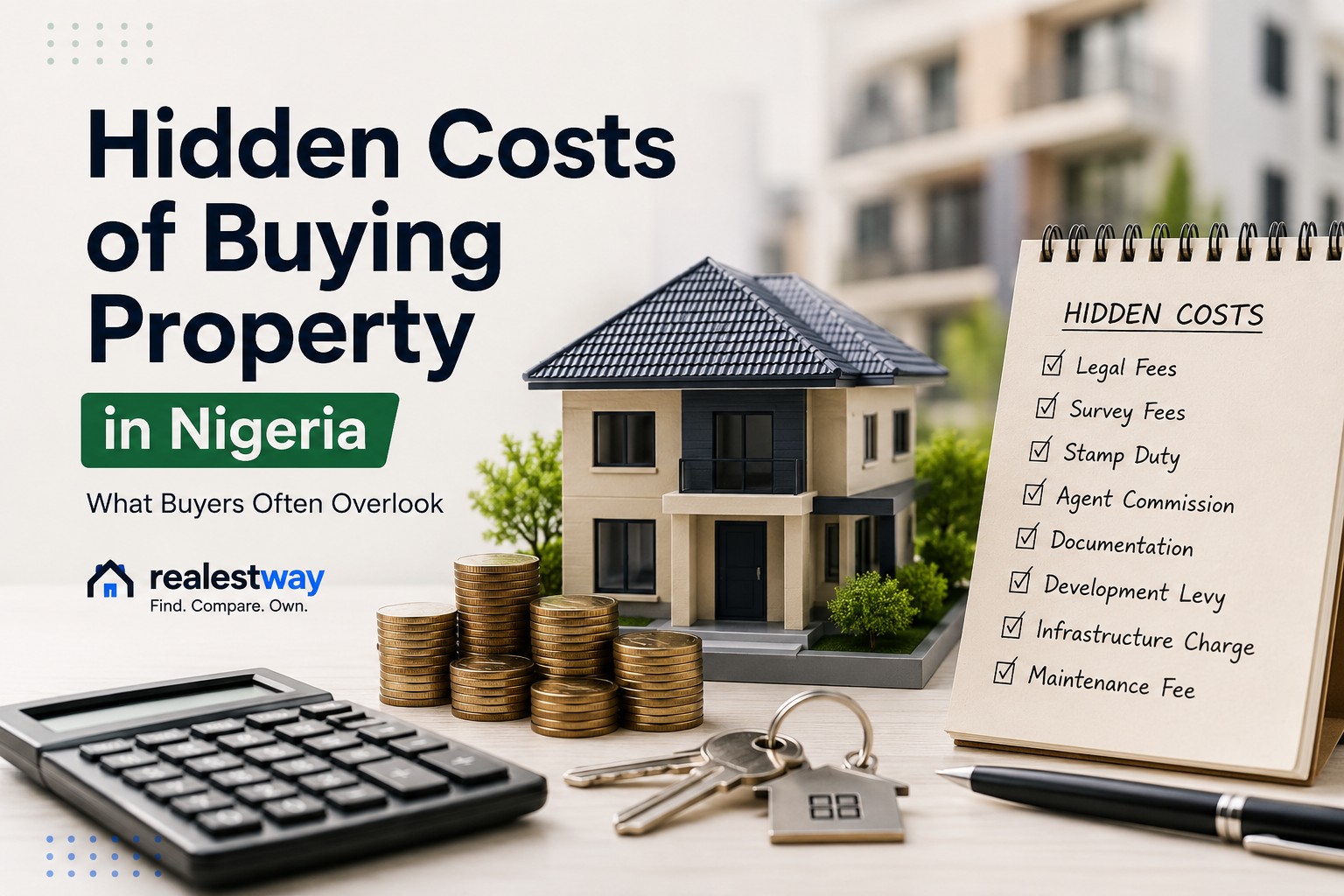
Hidden Costs of Buying Property in Nigeria: Real Estate Platform
Hidden costs in Nigeria property purchases can vary, typically adding a range of 15–25% beyond the listed price depending on various factors. Legal fees alone run 5–10% of property value, meaning a ₦30 million home requires ₦1.5–₦3 million more for a qualified Lagos solicitor. We help Nigeria buyers surface these true costs early through structured, verified listings on Realestway